Nutrition Education
Demystifying Breakfast: What Actually Makes a Good Morning Meal?
Is breakfast essential? Explore what makes a balanced morning meal, with practical savoury and sweet examples.
By Ismail Sattaoui, Registered Associate Nutritionist (ANutr) ·
Put these two breakfasts side by side and it’s tempting to label one the “healthy” choice: eggs, smoked salmon and asparagus on one plate, pancakes and banana on the other. But a photograph doesn’t tell us the full story. Ingredients, portions, appetite and what you eat across the day all matter.
So what should we actually look for in a good breakfast?
Is breakfast essential?
Not for everyone. Breakfast can be a convenient way to get energy and nutrients into your day, but eating it isn’t a shortcut to weight management. A 2019 review of randomised trials in The BMJ found no convincing evidence that eating breakfast causes weight loss or that skipping it causes weight gain. The studies were short, so this isn’t a recommendation to skip breakfast either.
If you’re hungry in the morning, eat. If you prefer eating later, think about whether your overall diet meets your needs.
What makes a breakfast balanced?
I usually start with three questions: Where’s the energy coming from? Is there a protein source? And can we add some fibre?
Oats, wholemeal bread and fruit provide carbohydrate. Eggs, yoghurt, beans and fish contribute protein. Fruit, vegetables, nuts and seeds bring extra nutrients and variety.
And what exactly is fibre? It’s the part of plant foods that we cannot fully digest. Different fibres help keep bowel movements regular, support beneficial gut bacteria and, in some cases, help lower cholesterol. Diets rich in fibre are also associated with a lower risk of some long-term diseases. The British Nutrition Foundation recommends 30 g a day for UK adults; most of us fall short.
A simple start? Swap white toast for wholemeal, add berries to yoghurt, or sprinkle seeds over oats. You don’t need every food group at every meal: the NHS Eatwell Guide looks at balance across the day or week.
Let’s look at the two plates

Savoury: Egg, smoked salmon and greens can make a satisfying breakfast. At home, try a poached egg, wholemeal toast, spinach and a little smoked salmon. Smoked salmon can be salty, so vary your protein sources.
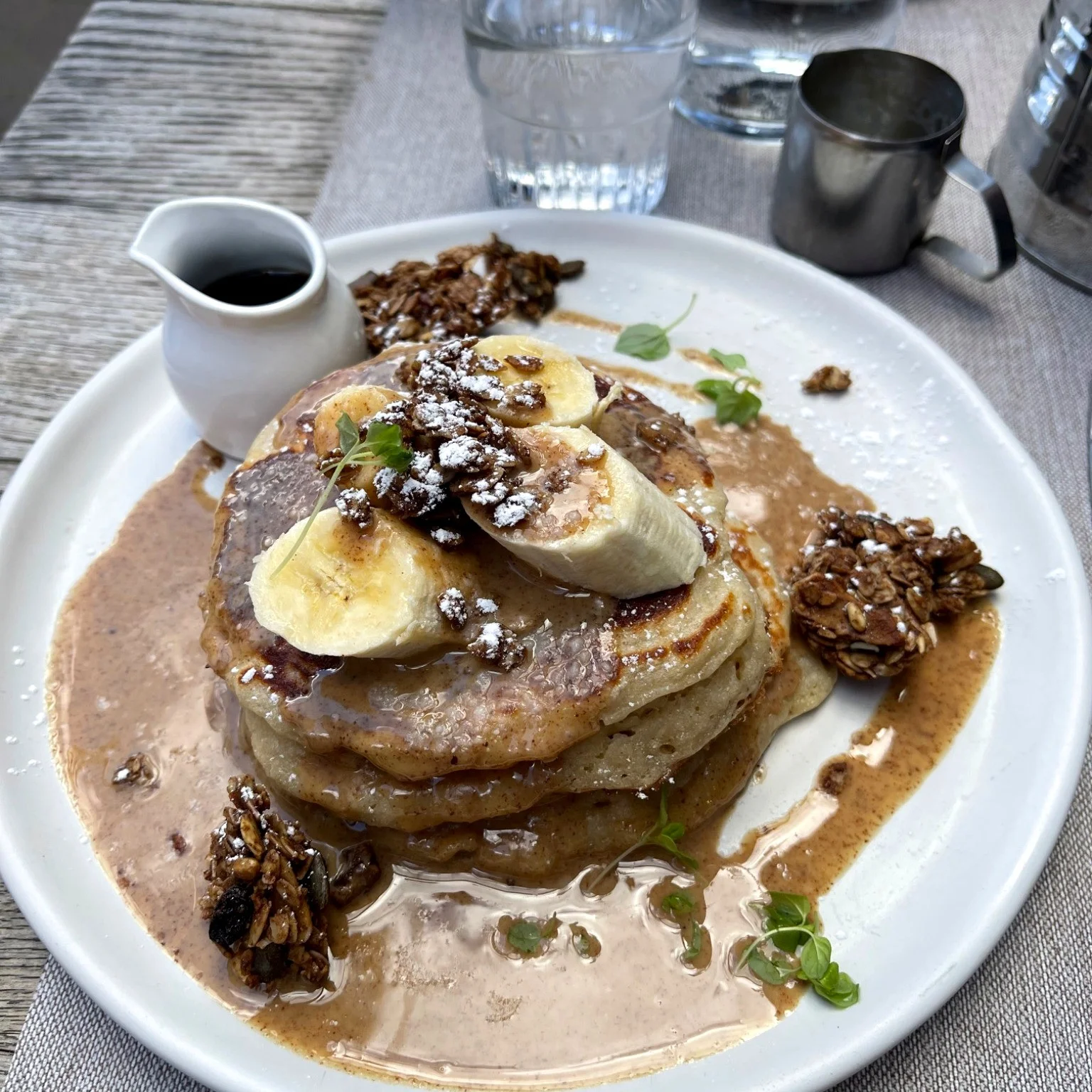
Sweet: Pancakes aren’t automatically a poor choice. Try oat-and-egg pancakes with banana and plain yoghurt. Syrup can fit too; the quantity simply changes the sugar and energy content.
For a quick alternative, combine 40 g oats, 170 g plain high-protein yoghurt, a small banana and 10 g nuts. That’s roughly 400–450 kcal and 25 g protein, depending on the products used. These are illustrative estimates, not values calculated for the photographed café meals.
And if you train in the morning?
Timing matters. A larger meal may suit you two to three hours before exercise; closer to training, a banana or slice of toast may feel easier to digest. The British Dietetic Association explains how carbohydrate needs vary with training demands.
There’s no perfect breakfast or universal calorie target. Choose something you enjoy, that fits your routine and leaves you feeling well fuelled.